Blog
How to Choose a Wood Nightstand for Your Bedroom

A wood nightstand should do more than fill the space beside your bed. It should keep everyday essentials within reach, provide useful bedside storage and fit comfortably into your bedroom layout.
The right choice depends on your bed height, available floor space and the items you want nearby. This guide explains how to compare proportions, storage layouts and practical details before choosing a nightstand for your home.
Measure the Space Beside Your Bed
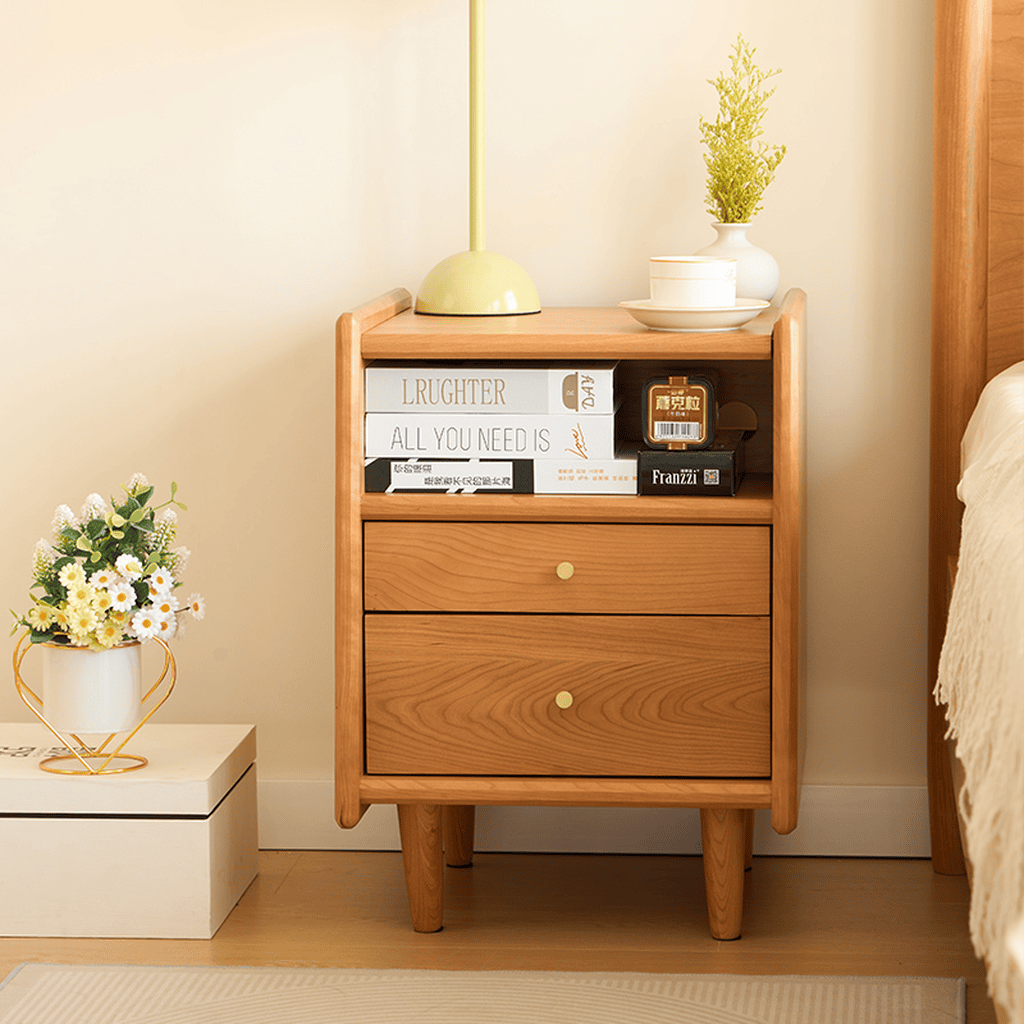
Start by measuring the area where the nightstand will sit. Check its proposed width and depth against the bed frame, nearby walls and the route you use to get in and out of bed.
Include anything that may affect placement, such as skirting boards, curtains, electrical outlets and wardrobe doors. A nightstand may fit into a gap but still make the room inconvenient to use.
Mark its footprint on the floor with painter’s tape, then check whether you can:
- Get into and out of bed comfortably.
- Open nearby drawers and doors.
- Reach electrical outlets where needed.
- Move around the bed without squeezing past furniture.
- Access the nightstand’s storage in its intended position.
Measure from the outside edge of the bed frame rather than the mattress alone. An upholstered or projecting frame can occupy additional space.
Compare Nightstand Height with Your Mattress
Your mattress surface provides a useful starting point when comparing nightstand heights. A tabletop close to that level may make it easier to reach a lamp, book or glass of water, although the best position depends on your bed and personal preferences.
Measure from the floor to the top of your mattress with your usual bedding arrangement in place. Compare that measurement with the nightstand’s overall height.
Think about how you reach for things while lying down or sitting in bed. A tabletop that looks balanced in a photograph may feel too low or too high in your room.
Also consider the objects you intend to place on it. The height of a bedside lamp, for example, affects the overall arrangement as well as the position of its light.
Choose Bedside Storage Around Your Routine
Before deciding on a storage layout, list what you keep beside the bed. A phone and a book require a different arrangement from reading glasses, chargers, journals and other small essentials.
Open shelves make frequently used items easy to see and reach. Enclosed compartments can help keep smaller belongings out of view. Neither is automatically better; the useful choice is the one that suits your habits.
Separate your belongings into two groups:
- Items you use every evening or morning.
- Items that can be stored elsewhere in the bedroom.
This helps prevent the nightstand from becoming a general storage area. Keeping the tabletop relatively clear also leaves room for lighting and makes everyday cleaning easier.
When comparing products, check the usable compartment dimensions where available. Overall furniture dimensions do not tell you exactly what will fit inside.
Consider How You Access the Storage
The way a nightstand opens or moves matters as much as the amount of storage it provides.
For drawers and doors, check the clearance required when fully open. Consider whether bedding, the bed frame or adjacent furniture could obstruct access.
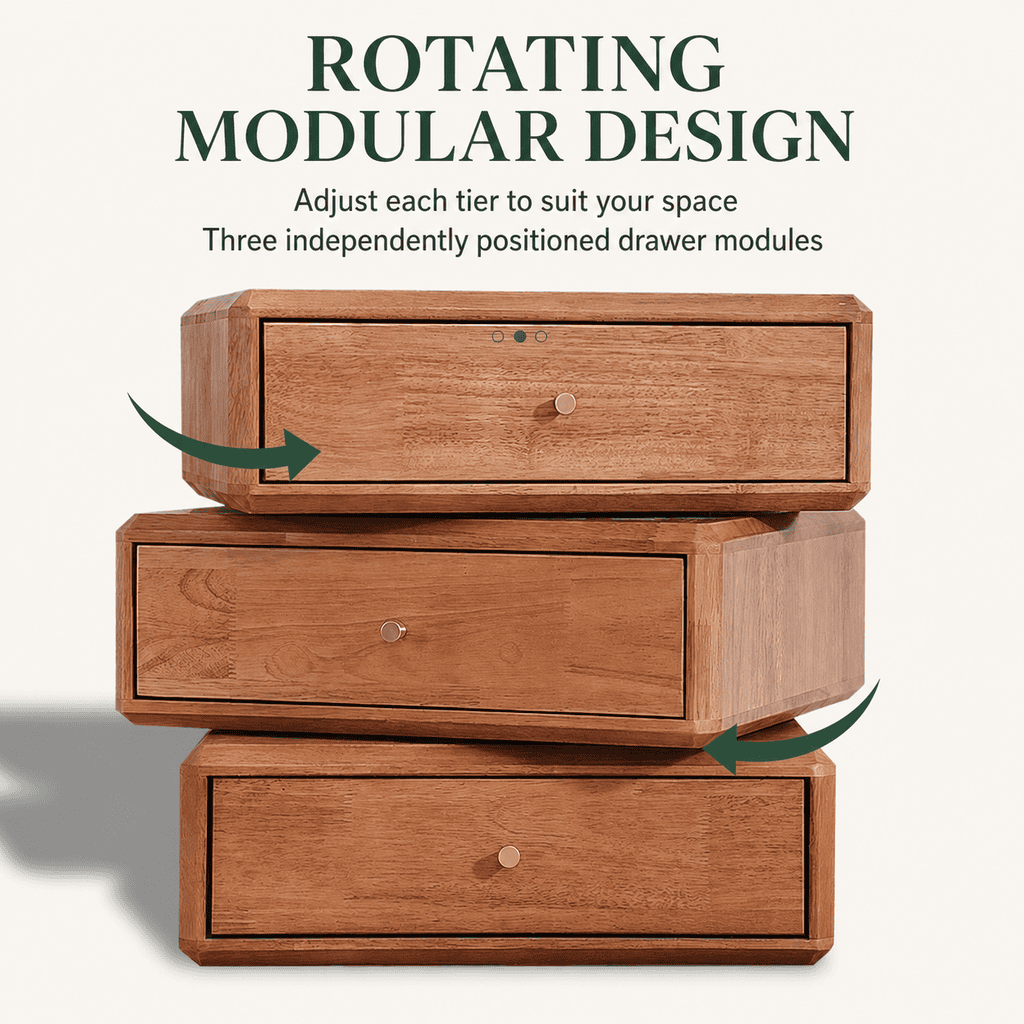
For a rotating design, check the space needed for its moving sections in your intended position. Do not assume that the closed footprint represents the full operating space.
The Three-Tier Rotating Wood Nightstand is one option to explore when comparing tiered bedside storage. Review its current product information and dimensions to assess how the design would work beside your bed.
Plan for Charging and Cables
If you charge a phone or use a bedside lamp, include cable routing in your layout from the beginning.
Check where the nearest outlet is and whether you can reach it once the furniture is in place. Consider the cable length needed to connect your devices without leaving cords stretched across a walkway.
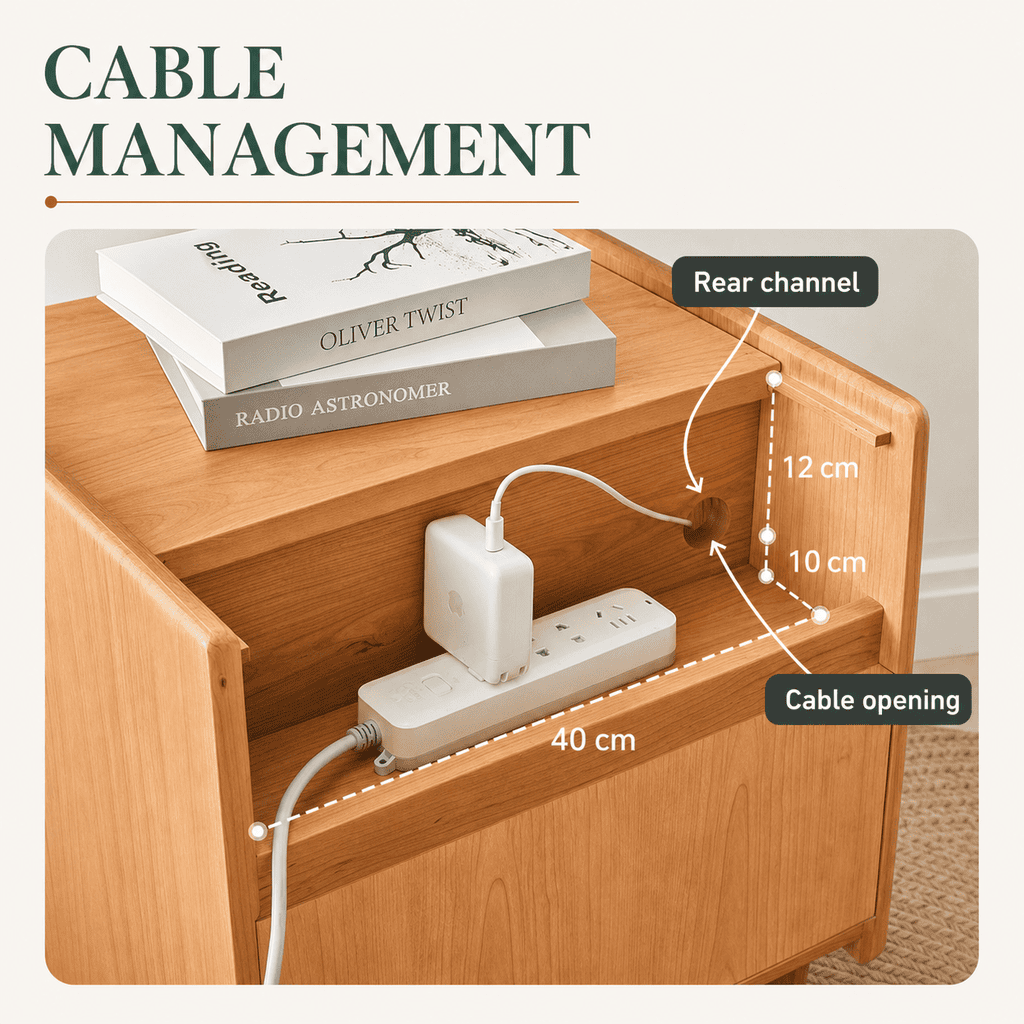
A cable-management feature may help organise the route, but it does not automatically mean that a nightstand includes sockets, USB ports or wireless charging. Confirm the exact features and included components on the individual product page.
The Natural Cherry Wood Cable-Management Nightstand offers another design to consider for your bedside arrangement. Compare its layout with the devices, lighting and storage you use each day.
Coordinate Your Wood Nightstand with the Bedroom
A wood nightstand does not need to match every other piece of furniture exactly. It can connect with the room through its tone, shape or proportions.
Start with the largest elements: the bed, flooring and wardrobe. Then consider whether you want the nightstand to blend into the setting or introduce a subtle contrast.
A curved profile can repeat shapes found in an upholstered bed or rounded lamp. A more linear design may connect with straight-edged furniture elsewhere in the room.
If you are furnishing both sides of a bed, matching nightstands can create a consistent arrangement. Different designs can also work when their heights and visual proportions feel balanced and each provides the storage its user needs.
Leave enough tabletop space for the objects you actually use. Browse bedroom lighting options with the nightstand’s surface area and your reading habits in mind.
Check Materials and Furniture Care Guidance
Product names and photographs are only starting points when comparing materials. Review the stated construction, surface finish and care instructions for each nightstand.
Do not assume that every component uses the same material or that a wood appearance identifies a particular wood species.
Before buying, check any available guidance on cleaning, spills and placement. Follow the product-specific instructions when choosing cleaning products or deciding where to position the furniture.
Our furniture care and assembly guide provides general advice to read alongside the instructions supplied with your product.
Review the Practical Details Before Ordering
Before making your final choice, confirm:
- Overall width, depth and height.
- Usable storage dimensions where provided.
- Clearance needed for drawers, doors or rotating sections.
- Stated materials and finish.
- Included components.
- Assembly requirements.
- Delivery information and return eligibility.
If a measurement or feature is essential to your layout but is not clearly stated, ask for clarification before ordering.
Explore the Lomera Living storage collection to compare options for your bedroom and other living spaces.
Find a Nightstand That Makes Daily Life Easier
The right wood nightstand combines comfortable reach, practical bedside storage and proportions that suit your room.
Begin with your measurements, decide what needs to stay close at hand and check how the furniture functions in its intended position. Those simple steps will help you choose a piece that feels considered and useful every day.
Frequently Asked Questions
How tall should a wood nightstand be?
Use the top of your mattress as a starting reference, then consider your preferred reaching position. Compare the nightstand’s height with your actual bed setup rather than relying on a general bed-height label.
How much bedside storage do I need?
Start with the items you use each morning and evening. Choose enough space to organise those essentials while keeping the tabletop usable. Belongings you rarely need beside the bed can usually be stored elsewhere.
Do nightstands need to match the bed?
No. A nightstand can complement the bed through a related colour, shape or proportion. Check the combination within the whole room, including flooring, lighting and other furniture.
Is a rotating nightstand suitable for a small bedroom?
It depends on the product’s dimensions and the clearance its moving sections require. Check both its closed footprint and operating space before deciding whether it suits a narrow bedside area.
Does a cable-management nightstand include charging ports?
Not necessarily. Cable management describes a way of routing or organising cables. Built-in sockets, USB ports and wireless charging should only be expected when the product description explicitly lists them.