

Blog
How to Choose the Right Sofa for Your Living Room

Choosing the right sofa starts with understanding your space and how you use it. Beyond colour and shape, a sofa needs to fit your room, support your preferred sitting position and work with the furniture around it.
This guide explains how to choose the right sofa for your living room, from measuring the available space to comparing upholstery, planning your layout and checking delivery access.
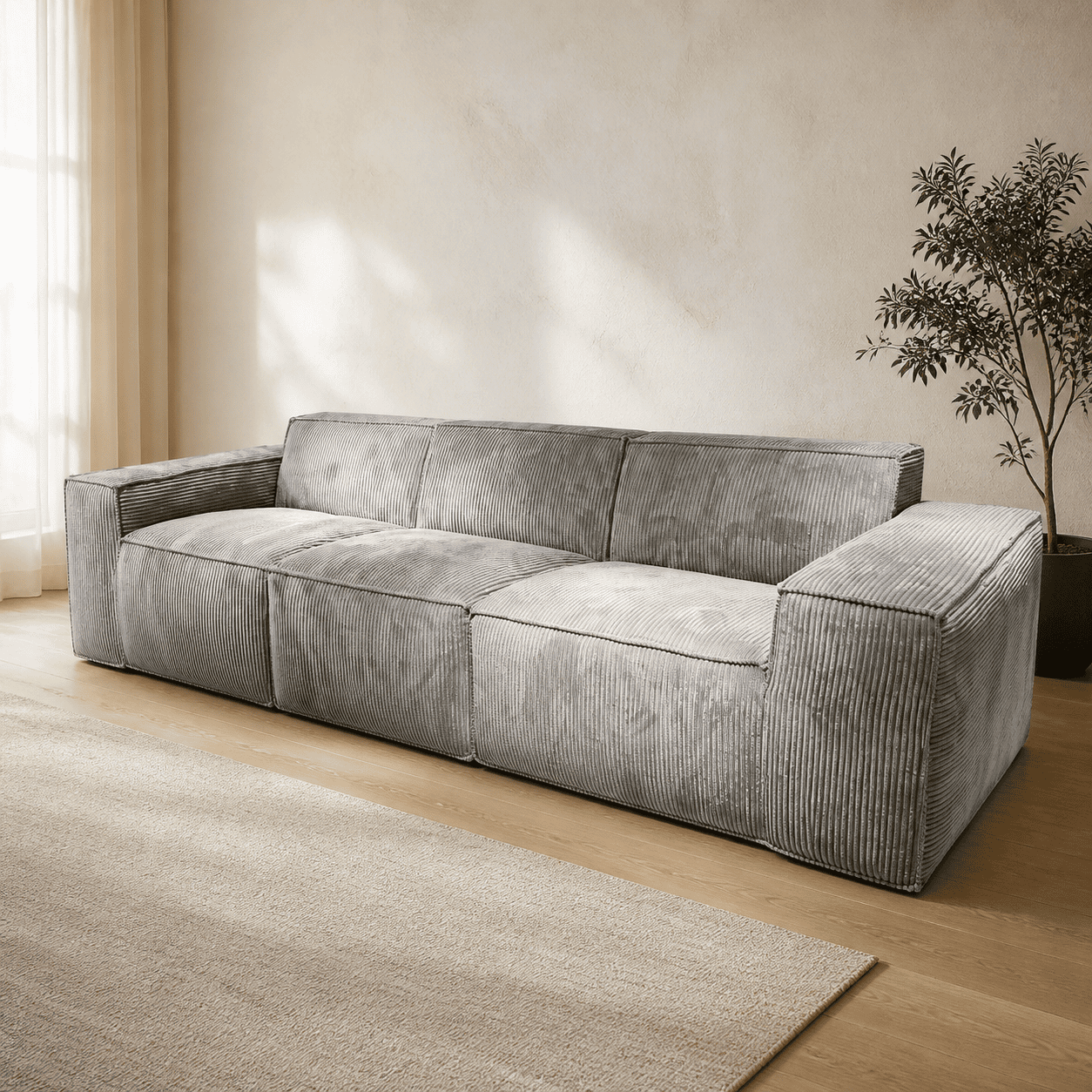
Start with Your Room Measurements
Before comparing sofas, measure the area where you intend to place one. Note the position of doors, windows, radiators and built-in furniture, along with the routes people use to move through the room.
Use painter’s tape to mark the sofa’s proposed footprint on the floor. Include its full width and depth, then walk around the outline to see how it affects everyday movement.
Check that you can still:
- Open nearby doors and storage drawers.
- Reach windows and curtains.
- Walk comfortably between seating and tables.
- Move through the room without cutting across the seating area.
- Extend a sofa bed or reclining section, if applicable.
Compare your measurements with the individual product information. Overall sofa dimensions and usable seat dimensions serve different purposes: one tells you how much room the sofa occupies, while the other helps you assess how you will sit.
Choose the Right Sofa Size for Your Space
The best sofa size balances seating needs with the proportions of your living room. A sofa that technically fits may still leave too little space for a table, an armchair or a clear walkway.
In a compact room, compare overall width with usable seating space. Wide arms add visual presence but also occupy part of the sofa’s footprint. A slimmer profile may leave more room for other furniture, depending on the design.
A larger room can accommodate a more substantial sofa, although its placement still matters. Consider whether one long sofa or a smaller sofa paired with separate chairs would better support conversation and daily use.
Seat labels such as “three-seater” are useful starting points, but they do not replace measurements. Compare the actual seat width and layout with the number of people who will regularly use the sofa.
Think About How You Relax
Your daily routine should guide your choice as much as your room dimensions.
For reading or conversation, you may prefer a seat that supports a more upright position. For watching films or stretching out, a deeper seat may appeal. Comfort depends on your height, posture and preferences, so photographs alone cannot tell you whether a sofa will feel right.
Compare these details:
- Seat height and depth.
- Back height and shape.
- Arm height and width.
- Cushion construction.
- Any stated firmness information.
- The position and support of loose cushions.
An easy starting point is to measure a chair or sofa you already find comfortable. Use those measurements as a reference when comparing new designs.
Explore the Lomera Living sofa collection with your preferred dimensions and sitting habits in mind.
Select a Shape That Works with Your Layout
A straight sofa can work against a wall or help define a seating area within an open-plan room. A curved design introduces a softer outline, but its full footprint still needs to leave practical space around nearby furniture.
Corner and chaise configurations require particular attention to orientation. Check the product’s layout diagram and confirm how the retailer defines left-hand and right-hand configurations. Match the pictured arrangement to your room rather than relying on the label alone.
If you are considering modular seating, confirm which components are included and which arrangements the specific product supports. Do not assume that every section can be separated, reversed or repositioned.
Start by identifying the room’s main activity. A conversation area may benefit from seats facing one another, while a television-focused layout needs comfortable viewing positions and clear routes through the room.
Compare Upholstery and Furniture Care Requirements
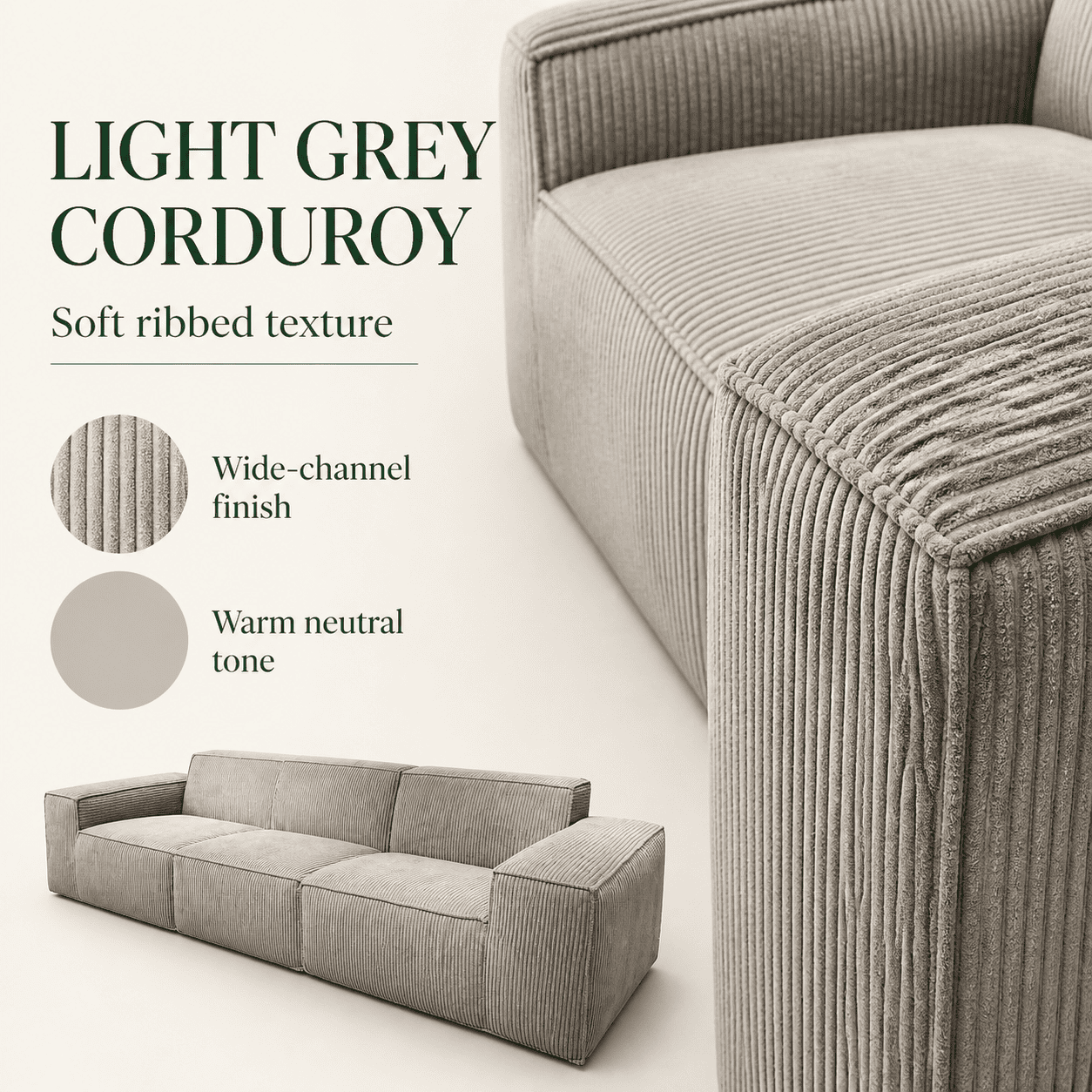
Upholstery affects how a sofa looks, feels and fits into your routine. Texture can make a strong visual difference even when two fabrics share a similar colour.
Corduroy introduces a visible ribbed texture. Other woven surfaces may create a quieter appearance, while fabrics with a directional pile can change in appearance as the light or viewing angle changes.
Check the stated material composition and care instructions for each sofa. A fabric name or photograph does not establish stain resistance, scratch resistance or suitability for a particular cleaning method.
Before choosing, consider:
- How frequently the sofa will be used.
- Whether children or pets share the space.
- How much direct sunlight reaches the seating area.
- Whether covers are removable and how they should be cleaned.
- Whether the maintenance requirements fit your routine.
Removable covers are not automatically machine washable. Follow the product-specific instructions before using water, cleaning products or specialist equipment.
Our furniture care and assembly guide provides general guidance, alongside the instructions supplied with your individual product.
Choose a Colour That Connects the Room
Look at your flooring, wall colour, curtains and existing furniture before selecting upholstery. A sofa occupies a large visual area, so its colour should work with the room as a whole.
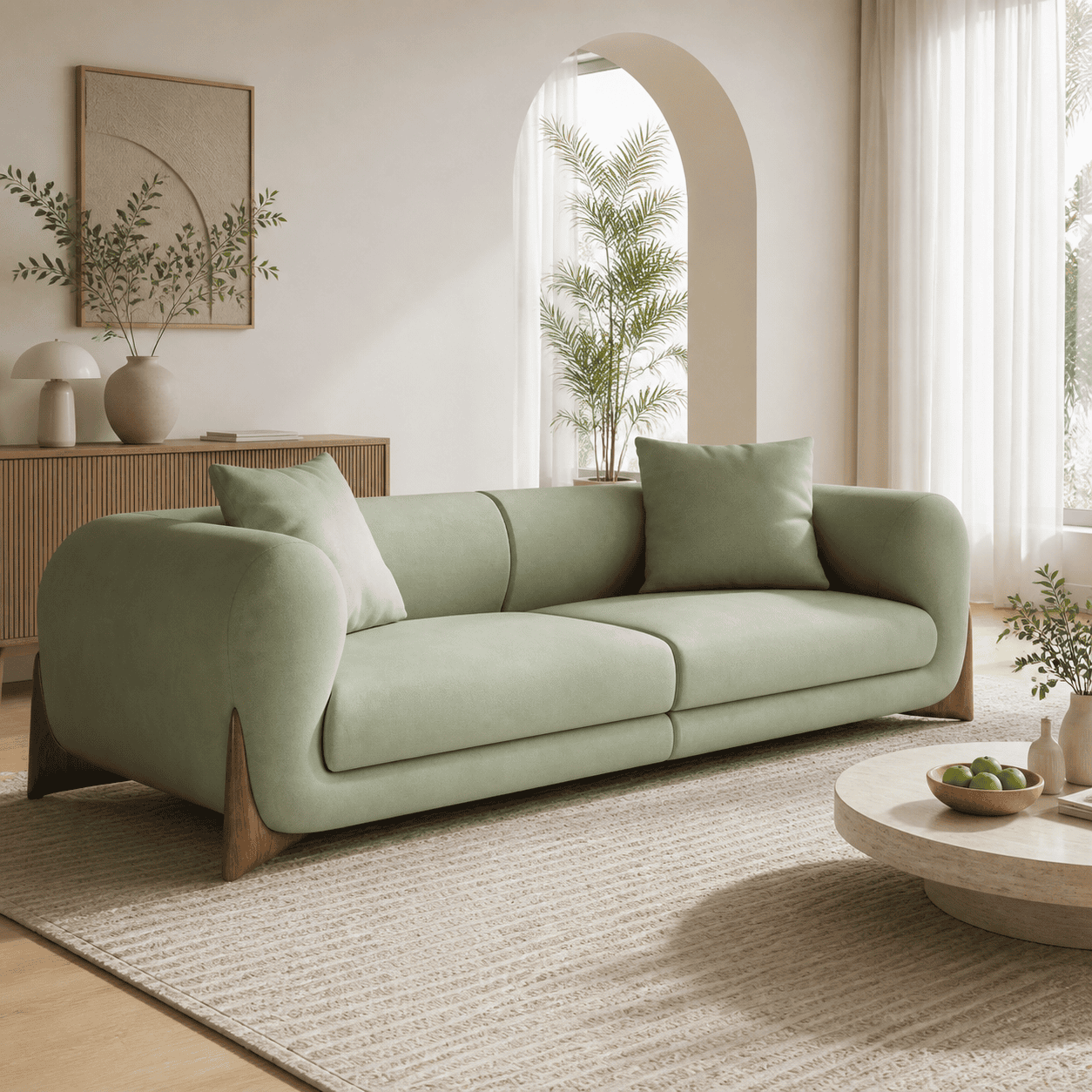
Neutral shades can create a flexible foundation for different cushions and accessories. Green, blue or other more expressive colours can become a focal point when balanced with quieter surrounding finishes.
Consider the effect you want to create. A sofa close in tone to the walls may feel more visually integrated, while a contrasting shade can give the seating area greater definition.
Practical considerations matter too. Light and dark fabrics show different kinds of dust, fibres and marks; neither is automatically easier to maintain.
Where samples are available, view them in the room during daylight and evening lighting. Screen settings and photography can affect how upholstery appears online.
Coordinate Your Sofa with Other Modern Furniture
Once you have chosen the sofa’s approximate size and position, plan the pieces around it.
A coffee table should be convenient to reach without making movement awkward. Side tables can provide useful surfaces where a central table would take up too much space. Separate seating may help create a more flexible arrangement for guests.
Explore complementary coffee and side tables, armchairs and lighting according to the space you have available.
Modern furniture does not need to match exactly to feel connected. Repeating a wood tone, curved shape or accent colour can bring different pieces together.
Keep the arrangement useful as well as visually balanced. Position lighting around reading or conversation areas, and check that tables and storage remain easy to access.
Check Delivery Access Before Ordering
A sofa must fit both its final position and the route into your home.
Measure door openings, hallways, staircases, landings and lifts. Pay attention to turns, overhead restrictions and fixed obstacles. A doorway’s width alone may not tell you whether a large package can pass through it.
Check packaged dimensions, the number of packages and any confirmed assembly requirements. Only plan around removable legs, arms or other components when the product information explicitly confirms they can be removed for delivery.
Review the applicable Shipping & Delivery Policy and the product’s delivery details. Do not assume that standard delivery includes carrying furniture upstairs, placing it in your chosen room or assembling it.
If access is uncertain, contact the retailer before ordering.
Review the Final Details
Before completing your purchase, check:
- The selected size, colour and configuration.
- Overall dimensions and usable seat dimensions.
- Upholstery and other stated materials.
- Included components and accessories.
- Assembly and care requirements.
- Packaged measurements and delivery access.
- Applicable processing and transit estimates.
- Return eligibility, particularly for customised or made-to-order products.
Review the Returns & Refunds Policy alongside any product-specific conditions. If an important detail is missing, ask for clarification before placing your order.
Find a Sofa That Fits Everyday Living
To choose the right sofa, begin with accurate measurements, consider how you relax and compare the details that will matter over time. Colour and shape help define the room, while seat proportions, care requirements and practical access determine how well the choice works in daily life.
Explore the Lomera Living sofa collection to find a design that suits your space and the way you live.
Frequently Asked Questions
How do I choose the right sofa size?
Measure the available floor area and mark the proposed sofa footprint with painter’s tape. Check surrounding walkways and nearby furniture, then compare the overall and usable seat dimensions. Separately confirm that the packaged sofa can pass through the delivery route.
Is a deeper sofa always more comfortable?
No. A deeper seat may suit lounging, but it may not provide your preferred support for upright sitting. Compare seat depth, seat height and back support with furniture you already find comfortable.
Should a sofa sit against the wall?
It depends on the room. Placing a sofa against a wall may preserve open floor space, while positioning it away from the wall can define a seating area in a larger room. Keep natural walkways clear in either arrangement.
What sofa fabric is best for a busy household?
Choose according to the specific fabric’s care instructions and any documented performance information. Consider everyday use, pets, spills and sunlight exposure. Do not assume that a fabric is washable, stain-resistant or suitable for pets based on its appearance alone.
What should I check before buying a sofa online?
Confirm the selected configuration, dimensions, materials, included components, care requirements and assembly details. Also review packaged measurements, delivery service, timing estimates and return eligibility before ordering.


One thought on “How to Choose the Right Sofa for Your Living Room”