

Blog
How to Choose Floor Lamps for Your Living Room

Floor lamps can make a living room more useful and inviting without taking up a tabletop. The right design might provide light beside a favourite chair, soften a quiet corner or introduce a decorative feature that gives the room character.
Start with the job you want the lamp to do. Then compare its proportions, shade, placement and practical requirements. This guide will help you choose lighting that works with your furniture and the way you spend time at home.
Decide What You Want the Light to Do
Before choosing a shape or finish, identify what is missing from your current lighting.
Perhaps your living room feels too bright when the ceiling light is on, but too dark when it is off. You may need light beside a reading chair, or a decorative piece to give an unused corner more presence.
These needs call for different approaches:
- Ambient lighting contributes to the general atmosphere of a room.
- Task lighting directs useful light towards an activity, such as reading.
- Decorative lighting adds visual interest through the lamp itself and the effect of its light.
One lamp may serve more than one purpose, but it will not necessarily do every job equally well. A softly glowing shade can create atmosphere without providing the focused illumination you prefer for reading.
Plan the Position Before Choosing the Lamp
Look at the room from the places where you actually sit. Identify a position that brings light into the seating area while leaving everyday movement comfortable.
Beside a sofa or armchair, check that the base will not obstruct your feet or compete with a side table. In a corner, allow enough space for the entire shade rather than measuring only the base.
Consider:
- The floor space occupied by the base.
- The widest part of the shade or frame.
- Any arms, suspended globes or projecting elements.
- Access to the switch.
- The location of the electrical outlet.
- A cable route that stays clear of walkways.
Mark the proposed base position with painter’s tape. Then check the space above it. A lamp with a small base can still need substantial clearance around its upper section.
If you are also planning your seating, our guide to choosing the right sofa for your living room can help you establish the layout first.
Compare Height and Shade Proportions
Overall height is only one part of how a floor lamp fits into a room. Shade width, stem shape and the position of the light source all affect its appearance and use.
A broad shade can balance a substantial sofa, but it may feel crowded beside a narrow chair. A tall, slender frame introduces height without necessarily creating a large visual block.
For a reading position, consider the lamp from your seated eye level. Check whether the shade screens the bulb from direct view and whether light can reach the page without your shoulder blocking it.
There is no single ideal height for every room. Your chair, sitting position and the lamp’s construction all influence the result.
Understand How the Shade Changes the Light
The shade contributes both to the lamp’s daytime appearance and to the way light enters the room.
A light-coloured fabric shade can create a softer visual effect, while coloured glass introduces colour and pattern. More enclosed shades may direct light differently from open designs.
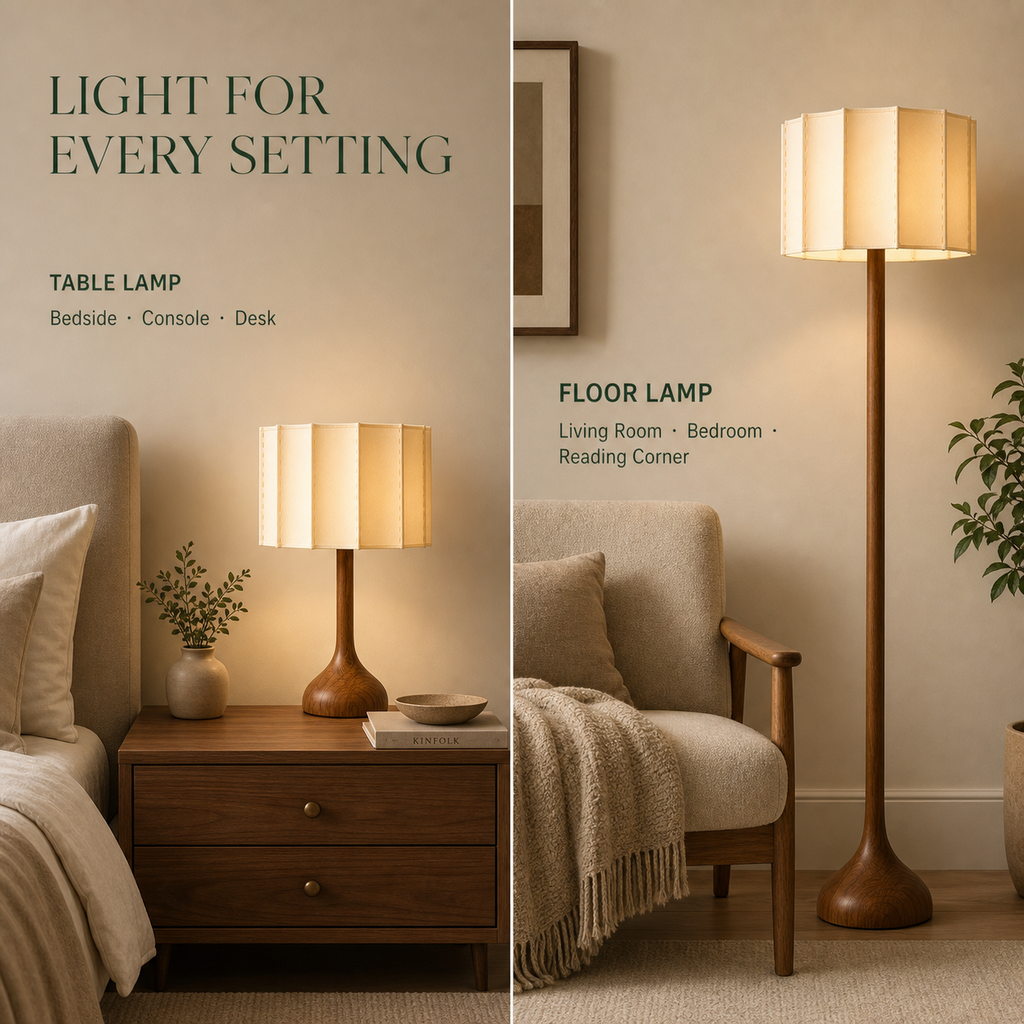
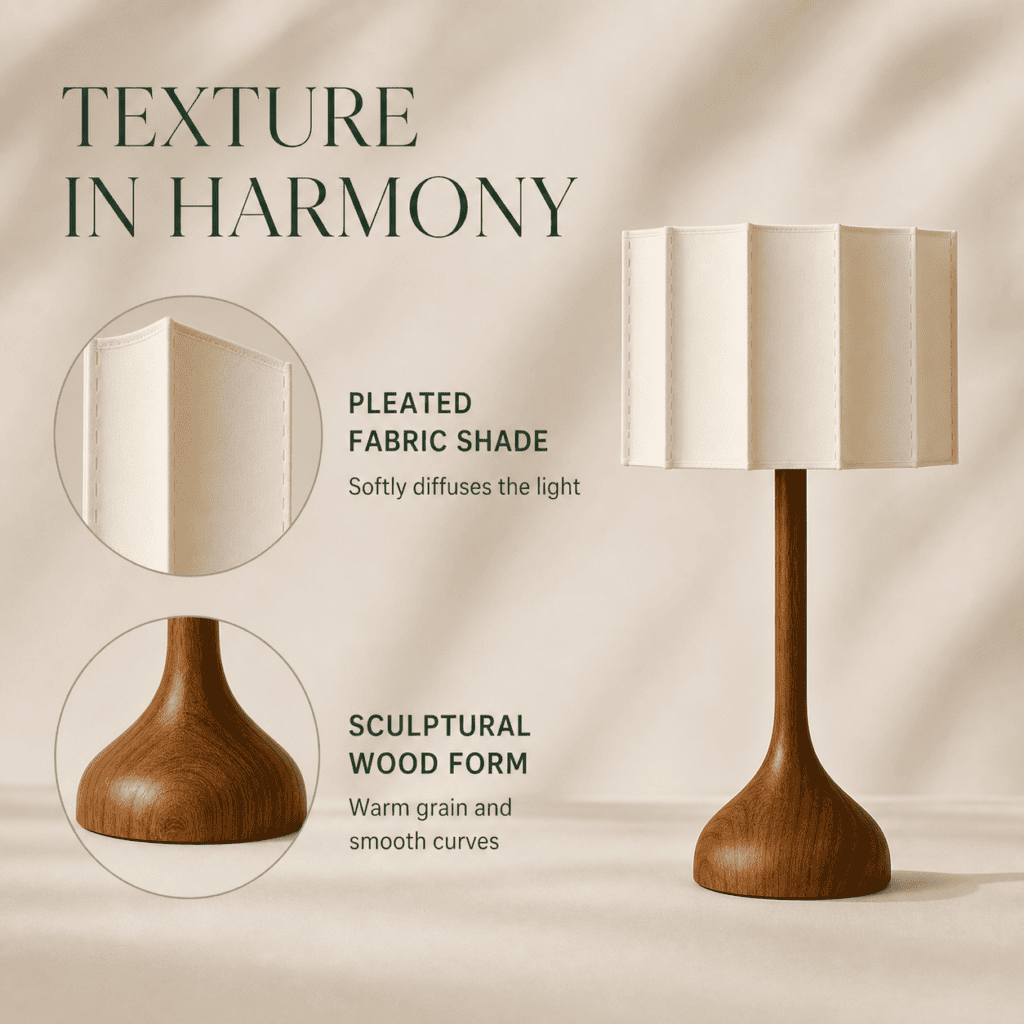
For example, the Wood Table and Floor Lamp with Pleated Shade pairs an ivory fabric shade with a sculptural wooden body. The product offers separate table and floor lamp options, so select the floor lamp version when planning a floor-standing arrangement.
Do not judge brightness from a styled photograph alone. The bulb, shade material, surrounding surfaces and camera exposure can all affect how bright a lamp appears.
Choose Between a Quiet Accent and a Statement Piece
Think about how much attention you want the lamp to attract.
If your living room already contains patterned textiles, colourful artwork or strongly sculptural furniture, a simpler lamp may help the arrangement feel balanced. Repeating a wood tone or a soft neutral shade can connect it with existing pieces.
A more decorative lamp can become the main feature in a quieter space. Give it enough visual room so that nearby objects do not compete with its shape.
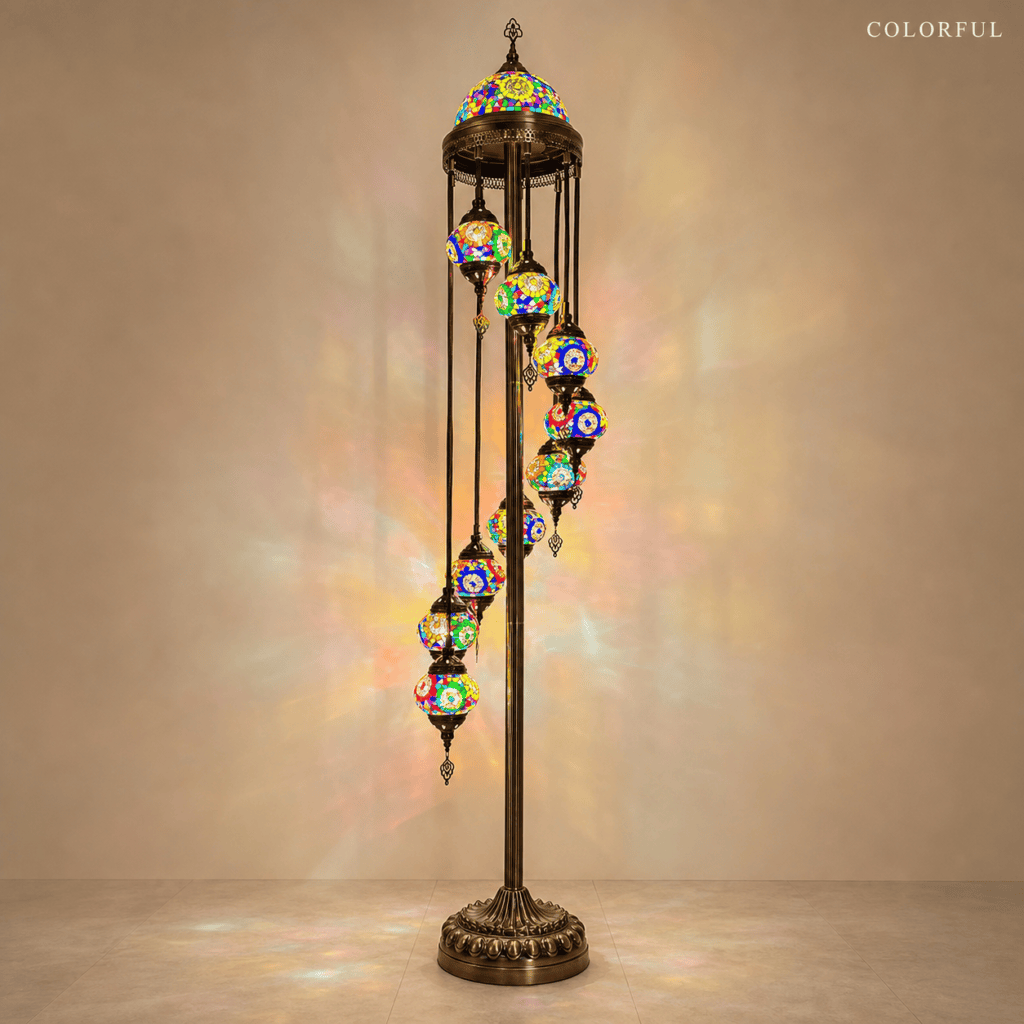
A mosaic floor lamp offers a different direction from a neutral fabric-shaded design. The Nine-Light Turkish Mosaic Floor Lamp combines colourful glass globes with an antique brass-tone frame. Its descending arrangement creates a decorative focal point, while the appearance of its reflections depends on the selected colour, bulbs and surrounding surfaces.
Consider this type of lamp for atmosphere and visual character. If you also need focused reading light, assess that requirement separately.
Combine Floor Lamps with Other Lighting
A living room does not have to rely on one central light source. A floor lamp, a table lamp and existing ceiling lighting can serve different parts of the room.
Try planning lighting around activities rather than filling every empty corner. A lamp beside a chair may support an evening reading routine, while a table lamp elsewhere can introduce another point of light.
The lamps do not need to be identical. A shared finish, shade colour or curved detail can connect them without creating a matching set.
Before buying multiple pieces, consider which lights you are likely to use together. Check their brightness and colour appearance so that the combination suits the atmosphere you want.
Browse the Lomera Living lighting collection to compare different forms and materials.
Check Bulbs, Controls and Electrical Requirements
Review the individual product information before choosing bulbs or planning how you will operate the lamp.
Confirm the bulb fitting, permitted wattage and electrical requirements. A matching plug shape alone does not establish voltage compatibility.
If you want dimming, check that the lamp, bulb and control are compatible. Do not assume that a lamp is dimmable because it is photographed with a soft glow.
Also check whether bulbs are included and where the switch is located. A beautiful lamp can become inconvenient if its control is difficult to reach from your usual seat.
Follow the product label and supplied instructions when assembling, operating or replacing components.
Review the Details Before Ordering
Use this checklist when comparing your final options:
- Overall height and maximum width.
- Base dimensions and placement clearance.
- Shade material and the intended lighting effect.
- Bulb fitting, wattage limits and voltage requirements.
- Plug type and switch position.
- Included components and assembly requirements.
- Current availability and applicable delivery estimates.
- Product-specific care guidance and return conditions.
Stock status and delivery timing can change, so check the selected product and variant when you are ready to order. In-stock availability does not automatically mean immediate dispatch or a guaranteed arrival date.
Bring the Room Together with Considered Lighting
The best floor lamps work with both the layout and the routines of a home. Start with the kind of light you need, choose a practical position and compare the proportions from the places where you sit.
Whether you prefer a pleated fabric shade or the colour of a mosaic design, let the lamp contribute something useful as well as something beautiful.
Explore lighting for your living room to find a design that suits your space.
Frequently Asked Questions
Where should I place a floor lamp in a living room?
Start beside a sofa, armchair or another area where you need light. Check the full shade width, switch access and cable route, and keep the base clear of everyday walkways.
Can a decorative floor lamp also be used for reading?
Sometimes, but it depends on the light output, shade and placement. Check whether the light reaches your page comfortably. A decorative glow does not necessarily provide focused task lighting.
Should floor lamps match the rest of the furniture?
They do not need to match exactly. A related finish, colour or shape can connect the lamp with the room while allowing it to have its own character.
Is one floor lamp enough for a living room?
That depends on the room, the lamp’s output and what you do in the space. Plan around the areas you use and consider how the lamp will work with other light sources.
Are the table and floor lamps shown together sold as a set?
For the Wood Table and Floor Lamp with Pleated Shade featured here, the table and floor versions are separate purchase options. Select the version you want on the product page; the styled image does not represent a two-lamp set.


One thought on “How to Choose Floor Lamps for Your Living Room”